
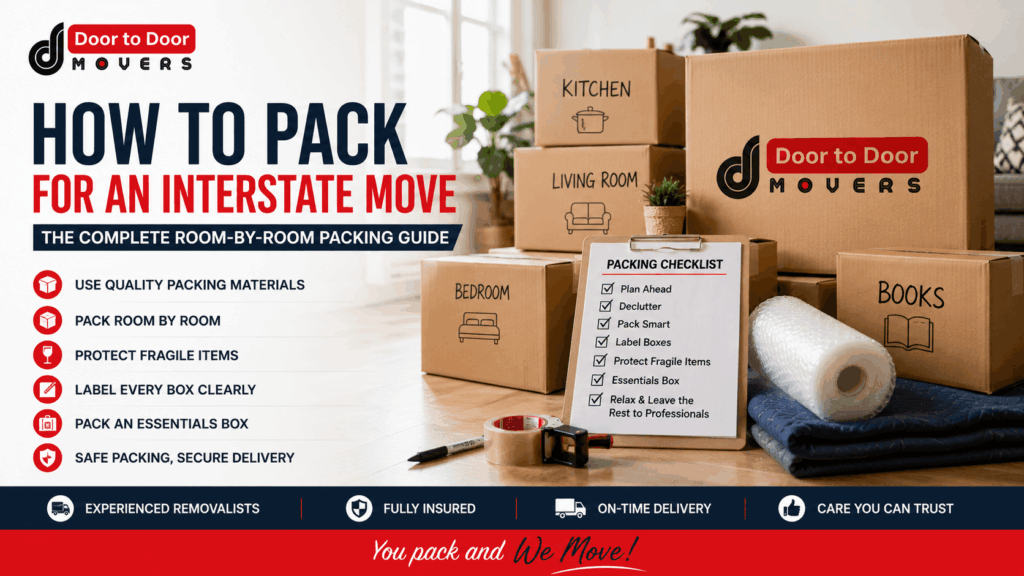
How to Pack for an Interstate Move: The Complete Room-by-Room Packing Guide
Packing for an interstate move is much more than placing your belongings into boxes. Every item needs to be packed carefully to withstand long-distance transport, multiple handling points, and varying road conditions. A well-planned packing strategy not only protects your furniture and valuables but also makes unpacking at your new home faster and less stressful.
At Door To Door Movers, we’ve helped thousands of Australian families relocate safely across the country. From small apartments to large family homes, we’ve seen firsthand that proper packing is one of the biggest factors in a successful interstate move.
If you’re still planning your relocation, we recommend reading our Interstate Moving Checklist: Expert Steps & Tips for a Smooth Move before you begin packing. It provides a complete timeline to help you stay organised from start to finish.
Why Proper Packing Matters During an Interstate Move
Unlike local moves, interstate removals involve longer travel distances and additional handling throughout the journey. Poorly packed boxes are more likely to shift, collapse, or become damaged during transport.
Packing correctly helps you:
- Protect fragile belongings.
- Reduce the risk of damage.
- Save time during unpacking.
- Keep boxes organised.
- Lower the chance of misplaced items.
Gather Your Packing Supplies Before You Start
Having the right packing materials makes the process much easier.
- Heavy-duty moving boxes
- Bubble wrap
- Packing paper
- Strong packing tape
- Permanent markers
- Furniture blankets
- Stretch wrap
- Zip-lock bags for screws and fittings
- Labels or coloured stickers
Using quality packing materials offers better protection during long-distance transport.
Start Packing the Rooms You Use the Least
Begin with areas that contain seasonal or rarely used items.
These usually include:
- Guest bedrooms
- Storage rooms
- Garage
- Attic
- Decorations
- Bookshelves
This allows you to continue living comfortably while making steady progress.
How to Pack Your Kitchen
The kitchen often takes longer than expected because of fragile items and small appliances.
Best packing practices:
- Wrap plates individually.
- Pack glasses vertically.
- Fill empty spaces with packing paper.
- Keep heavy appliances in smaller boxes.
- Clearly label fragile cartons.
How to Pack Bedrooms
Pack clothing based on the season.
- Leave clothes on hangers using wardrobe boxes.
- Use suitcases for folded clothing.
- Store jewellery separately.
- Pack bedside essentials last.
Keep one suitcase aside containing clothing for your first few days.
How to Pack the Living Room
Large furniture often requires additional protection.
- Remove table legs where possible.
- Wrap televisions securely.
- Protect artwork with cardboard corners.
- Use furniture blankets on timber surfaces.
- Secure loose cables together.
Protect Fragile Items Properly
Fragile belongings deserve extra attention during interstate transport.
Never overfill cartons.
Use cushioning between every item and fill empty spaces to prevent movement inside the box.
Always mark these cartons as FRAGILE.
Label Every Box Clearly
Professional labelling saves hours during unloading.
Include:
- Room name
- Brief description
- Priority level
- Fragile notice (if applicable)
Example:
Kitchen – Plates & Bowls – Fragile
Prepare an Essentials Box
Your essentials box should travel with you rather than inside the moving truck.
Include:
- Phone chargers
- Medications
- Toiletries
- Important documents
- Snacks
- Water bottles
- Cleaning products
- Basic kitchen supplies
If you’re relocating with animals, don’t forget their food, bedding, medications, and favourite toys. Our guide on Moving with Pets: A Complete Guide to a Safe and Stress-Free Relocation includes additional advice to help pets adjust during an interstate move.
Avoid These Common Packing Mistakes
- Waiting until the last minute.
- Using damaged boxes.
- Making boxes too heavy.
- Forgetting to label cartons.
- Packing hazardous items.
- Leaving empty space inside boxes.
- Mixing multiple rooms into one carton.
Should You Pack Yourself or Hire Professional Packers?
Many homeowners underestimate how long packing actually takes.
Professional packing services save time while providing extra protection for furniture, antiques, electronics, and fragile belongings.
Experienced removalists also know the safest packing techniques for long-distance transport.
Why Choose Door To Door Movers?
Door To Door Movers provides professional interstate moving services throughout Australia. Our experienced team uses proven packing methods, quality protective materials, and modern equipment to help ensure your belongings arrive safely.
Our interstate moving services include:
- Professional packing and unpacking
- Furniture dismantling and reassembly
- Furniture delivery
- Secure interstate transport
- Backloading services
- Storage solutions
- Door-to-door delivery across Australia
Final Thoughts
Proper packing is one of the most important parts of a successful interstate relocation. Starting early, using quality packing materials, and following a room-by-room approach will help protect your belongings while making unpacking much easier.
For more expert moving advice, explore our guides on Interstate Moving Checklist: Expert Steps & Tips for a Smooth Move and Top 10 Moving Tips to Save Money When Moving House. Together, these resources will help you plan a safer, smoother, and more organised move.
Ready to relocate? Contact Door To Door Movers today for a free quote and let our experienced interstate removalists handle your move with care.


LOCAL
→
INTERSTATE
→
INTERNATIONAL
Our Affiliations & Memberships